China Telecom and China Unicom have opened more than 27,000 shared 5G base stations.

On December 26, 2020, at the "2020 China Academy of Information and Communications Technology ICT Deep Observation Conference," Wang Zhiqin, vice president of the China Academy of Information and Communications Technology, stated that the network co-construction and sharing between China Telecom and China Unicom has received widespread attention from the industry. By December of this year, the number of shared base stations opened by the two parties has exceeded 27,000. On September 9 this year, China Unicom and China Telecom jointly announced that they would cooperate on 5G network co-construction and sharing. According to the cooperation agreement, Unicom will cooperate with China Telecom to jointly build a 5G access network nationwide. Both parties will delineate regions, construct zones, and be responsible for the 5G network construction work in their designated regions. Whoever constructs, invests in, maintains, and bears the cost of network operation will be responsible. In terms of network construction areas, the two parties will undertake the construction of the 5G network in 15 cities. Based on the total scale of the 4G base stations (including indoor distribution) of both parties as the main reference, the construction area ratio of Unicom and China Telecom in the five northern cities of Beijing, Tianjin, Zhengzhou, Qingdao, and Shijiazhuang is 6:4; in the ten southern cities of Shanghai, Chongqing, Guangzhou, Shenzhen, Hangzhou, Nanjing, Suzhou, Changsha, Wuhan, and Chengdu, the construction area ratio of Unicom and China Telecom is 4:6. Unicom will independently construct 9 cities in Guangdong Province, 5 cities in Zhejiang Province, and 8 northern provinces (Hebei, Henan, Heilongjiang, Jilin, Liaoning, Inner Mongolia, Shandong, and Shanxi) outside the aforementioned areas; China Telecom will independently construct 10 cities in Guangdong Province, 5 cities in Zhejiang Province, and 17 southern provinces outside the aforementioned areas. Previously, the two parties stated that the 5G network co-construction and sharing cooperation, especially the continuous sharing of 5G frequencies by both parties, will help reduce the construction and operation and maintenance costs of the 5G network, efficiently achieve 5G network coverage, rapidly form 5G service capabilities, enhance the market competitiveness of 5G networks and services, improve network efficiency and asset operation efficiency, and achieve mutual benefit and win-win results for both parties.

View Details

Italian Minister of Industry: Huawei should be allowed to participate in 5G network construction

According to Reuters, Italy's Minister of Industry stated last Sunday that Huawei should be allowed to participate in Italy's future 5G networks. This follows a recommendation from an influential parliamentary committee to block Huawei in Rome. The United States has been lobbying Italy and other European allies to not use Huawei equipment in next-generation networks, and is closely scrutinizing another Chinese telecommunications equipment supplier, ZTE, which the US claims may pose a security risk. Both companies firmly deny any such risks. "We have passed legislation to safeguard national security. As long as the correct countermeasures are taken, there will be no dispute over the possibility of (Huawei's) entry," Italian Industry Minister Stefano Patuanelli told Il Giornale. Last week, Italy's parliamentary security committee Copasir stated that the government should consider preventing Huawei and ZTE from participating in the deployment of 5G networks. Italy's largest telecommunications company, TIM, is selecting suppliers to upgrade its network infrastructure, and Huawei is one of the possible contenders. Italian Deputy Prime Minister Riccardo Fraccaro said last Friday that the government would not be able to ignore Copasir's opinion. However, Stefano Patuanelli stated on Sunday that "Huawei offers the most cost-effective solutions." He added: "You cannot wave the flag of the market with one hand and the flag of protectionism with the other."

What are China's intentions behind acquiring the '192' mobile number segment?

Next step, China Broadcasting Network officially launches mobile communication services? On December 24, the news that China Broadcasting Network received the "192" number segment public mobile communication network number issued by the Ministry of Industry and Information Technology, after being released by DVBCN in a timely manner, has received a lot of attention. The editor sees that friends from both the broadcasting and communication industries are enthusiastically discussing their yearning for the new number segment. Judging from the frequent bursts of news related to Guangdian 5G recently, as the year-end approaches, the shift of the broadcasting system, represented by China Broadcasting Network, to access mobile communication services is truly capturing the attention of many vertical industry players. And at the end of the year, not only the number segment, but also other "unofficial" news hotspots such as 5G co-construction, will serve as a bridge, and China Broadcasting Network will inevitably advance into 2020 under the focus of everyone's attention. For China Broadcasting Network, under unprecedented circumstances, how to directly launch 5G mobile communication services as a broadcaster will inevitably face pressure. After all, under such all-industry and national attention, how to sing a strange play well tests the coordination and strength of the entire system, including the top-level design and the basic execution level. The "19x" number segment is almost fully in place. This time, the Ministry of Industry and Information Technology issued all "19x" number segments to four companies, and clearly stated that it is to provide resource guarantees for 5G commercial use. These new number segments will also become effective means of attracting 5G new network users. According to the information currently known to DVBCN, the number segments that have been allocated are as follows: This "19x" number segment is not the first time issued by the Ministry of Industry and Information Technology. In 2017, the Ministry of Industry and Information Technology issued the 199 and 198 number segments, and then successively released the 191 number segments. Therefore, among the current "19x" number segments, only the 194 number segment has not been issued. What does the broadcasting network use the number segment for? In 2016, China Broadcasting Network actually obtained the "Basic Telecommunications Business Operating License" issued by the Ministry of Industry and Information Technology, but it was only allowed to operate domestic data transmission business and domestic communication facilities service business nationwide. These businesses have also been sought after by various provincial network companies. Under the siege of IPTV, OTT TV, and mobile internet video services provided by operators, the problem of user loss in the national cable television industry represented by China Broadcasting Network has never stopped, especially after the number of wired digital television users fell below 200 million, the situation is even more severe. 5G wireless networks are a "killer" that continues to destroy the survival environment of traditional cable television, but it is also a "top-notch needle" that can be used by the cable television industry to revitalize itself. Under such circumstances, China Broadcasting Network, using new technologies such as 5G as a lever, obtained the 5G commercial license issued by the Ministry of Industry and Information Technology, and provided a feasible channel for broadcasting to provide mobile communication services. According to DVBCN's author, the well-known foreign cable television service provider Comcast once also launched mobile communication business lines in order to open up the situation. Comcast then officially established "XfinityMobile" in 2017 to provide mobile communication services to its users, including XfinityMobile contract phones launched with some manufacturers. However, unlike China Broadcasting Network, Xfinity mainly provides mobile virtual network services. This time, the "192" number segment obtained by China Broadcasting Network is also the first public mobile communication number segment officially obtained by the national broadcasting system. DVBCN editor believes that the significance is reflected as follows: 1. It marks that China Broadcasting Network has basically determined that it will launch mobile communication services. Since the Ministry of Industry and Information Technology agreed to China Broadcasting Network's participation in 5G network construction last year (2018), China Broadcasting Network has also applied for mobile communication qualifications. Previously, many provincial network companies have launched LTE equipment bidding, mainly to conduct tests in multimedia broadcasting, integrated services, smart cities, etc. The formal establishment of this number segment means that China Broadcasting Network has the qualifications to carry out mobile communication services, and it is no longer just speculation. 2. It provides the "number segment" as a basic guarantee for the successful implementation of Guangdian 5G business. This year, the Ministry of Industry and Information Technology revised and added "fifth-generation digital cellular mobile communication services" to the "Telecommunications Business Classification Catalog (2015 Edition)". According to the explanation, the fifth-generation digital cellular mobile communication service refers to the voice, data, and multimedia communication services provided by the fifth-generation digital cellular mobile communication network. As mentioned in the previous article, the Ministry of Industry and Information Technology also stated that the issuance of this new number segment is also to lay the foundation for the promotion of 5G commercial use. China Broadcasting Network will also use this opportunity to take steps to lay out 5G. 3. It marks the formal establishment of the status of the fourth major operator, and China Broadcasting Network has truly become a telecommunications operator with the qualifications for number portability. On November 11 this year (2019), the Ministry of Industry and Information Technology listed China Broadcasting Television Network Co., Ltd. as a notification unit (enterprise) for number portability in the "Number Portability Service Management Regulations". At that time, it was speculated that China Broadcasting Network might also have the qualifications for number portability. Now, the establishment of the new number segment shows that China Broadcasting Network also has the qualifications for number portability. Because China Broadcasting Network itself is extremely weak in terms of communication infrastructure and user groups, under the impetus of the issuance of new number segments and the number portability policy, it can win over some user groups. After all, as a new operator, users are still willing to "try it out". Guangdian 5G still needs "fission" This time, China Broadcasting Network obtained the number segment for the first time, which has changed the long-term situation of the three major operators. Because the broadcasting network still needs to complete the preparation of infrastructure and solve the problems of business and market, it is impossible to predict the future complete appearance and direction for a while, but for users, it has opened up a new situation, added a new choice, and will also promote changes in the quality of communication services. Not long ago, China Broadcasting Network also stated in an industry meeting that it would achieve the goal of "First call" through 700M 5G VoNR by the end of 2019. It is reported that China Broadcasting Network and Huawei are preparing for SA-based 700MHz VoNR First call. This means that China Broadcasting Network will also directly cross the VoLTE stage and take the lead in deploying VoNR services. With the resource advantage of 700MHz, the cost of Guangdian building and opening base stations will be lower than that of the three operators, but the cost will not be very low. Previously, with the support of Huawei and other partners, China Broadcasting Network had a reliable source of small-scale supply of 700MHz 5G base stations. In terms of terminals, some domestic baseband chips already support the 700MHz frequency band, so there is also a guarantee for 5G mobile phones. In terms of the Internet of Things, chips already support the 700MHz frequency band. Various industry terminals can be customized and produced as needed. It is expected to enter a stage of rapid development after 2021. In addition, after China Broadcasting Network obtained the 5G license, the future direction of China Mobile has also been widely discussed. Currently available information shows that the equity structure of China Mobile is still 51% owned by China Broadcasting Network and 49% owned by CITIC Group. If China Broadcasting Network formally launches mobile communication services, what arrangements will be made for China Mobile? It is also worth looking forward to. With the approach of 2020 and the expiration of the "13th Five-Year Plan", whether it is the "national cable television network integration" or the "broadcasting 5G construction", China Broadcasting Network has unexpectedly reached the center of the stage under the "secrecy". Judging from the official announcement during the World 5G Conference, the broadcasting system should have made plans and arrangements, dared to deal with public opinion, and has certain action capabilities as a guarantee, but more substantive content is still being determined.

Industrial internet is attracting significant attention: Over 31 provinces and cities across China have released related documents

Today, the highly anticipated "12th ICT In-Depth Observation Conference" of the China Academy of Information and Communications Technology (CAICT) was grandly held at the National Convention Center in Beijing. At the conference, Li Haihua, deputy director of the Industrial Internet and Internet of Things Institute of CAICT, delivered a special report on the achievements of the industrial internet. Li Haihua stated that the CPC Central Committee attaches great importance to the development of the industrial internet and has pointed out the need to continue promoting its innovative development; the Ministry of Industry and Information Technology (MIIT) has also issued a series of documents on the industrial internet, promoting its development in China; at the local level, 31 provinces and cities nationwide have issued documents on the industrial internet. Applications of the industrial internet continue to expand and are rapidly being implemented in various fields, including major industries such as petroleum and steel. In 2018, the MIIT organized pilot demonstrations involving 72 companies across 15 industries. The applications of the industrial internet cover design, production, equipment maintenance, and enterprise management, with applications at all levels. The industrial internet first provides a foundation for connectivity. Different connection objects and scopes have stimulated many applications, including large-scale customization through user connection (represented by Haier), intelligent connection of logistics companies to provide precise services, and Jiulong Insurance Company's promotion of financial industry-related services. Network development is also very rapid, including enterprise extranets and commercial networks. Operators are actively involved, using 5G and SDN technologies. Operators such as China Mobile and China Unicom have launched dedicated networks and commercial test networks for industries, based on the national Future Network Experiment platform, which has now formed a large-scale environment for providing industrial enterprises with testing. Meanwhile, enterprise intranets have entered the deep-water zone of transformation. CNPC, for example, has built the largest IPv6 industrial production network in China. This includes the development of edge computing in various industries such as automobiles and electronics. Reports on interoperability testing have also been released. 5G+ industrial internet is a major hotspot, with applications at all levels and a layout of two zones and three belts. Industrial enterprises and operators are participating, and the depth of application is continuously expanding. In terms of identification, industrial supply and infrastructure development are very rapid. Surrounding the identification resolution software and hardware, CAICT has independently developed core software and, in cooperation with Huawei and Sugon, has developed independently produced chip operating systems and identification resolution software and hardware integrated devices. Enterprise node construction is also progressing rapidly. With the exploration of identification applications, highlights have been formed in supply chain management, full life-cycle management, and product traceability services. Many entities are actively participating in platform construction, including professional service companies, manufacturing enterprises, industrial technology and solution providers, all launching their own platforms. There are hundreds of existing platforms in China. We have organized evaluations, and more than 70 influential platforms exist. This year, the ministry organized "dual-cross platforms," and their capabilities, connected devices, registered users, number of APPs, and number of developers have continuously improved, generating significant value. There has also been much progress on the security front. The government has strengthened the top-level design of the industrial internet, issuing security guidelines and guidelines for provincial monitoring platforms to connect with the national security monitoring platform, forming a systematic monitoring system. The Industrial Internet Industry Alliance organizes competitions, forums, releases reports, and organizes security evaluation agencies to promote industry collaboration and development. It has also released a national industrial internet security situation risk early warning platform, a public service platform, and tools and management platforms for security testing. Many large enterprises have begun deploying enterprise-level monitoring nodes, and there have been many achievements in security technology services. The industrial internet industrial system is gradually being established around six core areas, and there are many new features due to technological development. Driven by national efforts, the scale of China's industrial internet industry, based on the comprehensive calculation of our institute's industrial internet industry monitoring platform, exceeded 700 billion yuan in 2018, with a compound annual growth rate exceeding 11.5%. The Industrial Internet Industry Alliance has played an important role, developing rapidly in terms of organizational structure, membership, and achievements. It also organizes large industrial internet conferences annually, with another planned for February next year. In 2019, the number of attendees exceeded 5,000. International cooperation and exchanges have made substantial progress, including the signing of memorandums of understanding with the US IEC, Japan IDI, and Europe's AOTI, the establishment of a joint working group, and the release of a joint white paper. The development of the industrial internet is an important foundation and support for the transformation and development of the real economy, and there is much room for future development. First, this year, based on the Industrial Internet Industry Alliance, the industrial internet system architecture 2.0 was released. Based on version 1.0 technology, it provides a more comprehensive and in-depth analysis of the industrial internet from four layers: business, function, implementation, and technology, hoping to provide better support and guidance for the industry. The construction of network infrastructure that closely meets the needs of vertical industries will become a priority. Many enterprises, with the construction of enterprise networks and platforms, and the need for interoperability between enterprises, the construction of cross-platform and cross-operator capabilities, and how the network can support this will become a development focus. 5G+ industrial internet will promote the development of enterprise private networks and operator slicing technology. There are more than 20,000 parks nationwide, providing a good application site for future applications of new network technologies. Identification is a major focus domestically and internationally, and the identification resolution system will be further improved. A few days ago, the identification resolution system was connected with Alipay, and the future entry points for identification services will be richer. The capabilities of identification services will not only be limited to queries, but will also play an important role in data sharing, search, and big data analysis. Distributed identification infrastructure innovation is accelerating, but it also faces many challenges. With the establishment of the W3C DID working group, distributed development will also become a new direction and accelerate implementation. Platforms have entered the stage of implementation and rooting of solutions. Technically, data twinning will be combined. Industrially, the complementarity and cooperation of capabilities between different platforms will become a focus. In terms of applications, they will expand into vertical fields. The ecosystem will play an important role in system integrators and developer communities. We must accelerate the promotion of data authorization and platform circulation. In terms of security, how to build a comprehensive security guarantee system as the industrial internet develops is very important. We expect that future security policies and standards will be further improved, and industry and enterprise classification management methods, overall supervision and inspection, risk assessment and data protection management systems will be formulated. Specific security guarantee technologies and monitoring platforms will be expanded to 31 provinces and cities annually. Large companies around security technologies, industries, and services will gradually emerge, playing an increasingly important role. International cooperation in security will be very active in the future. Industrial internet applications are deepening and expanding, with many significant changes from single-point to multiple application scenarios and from local to systematic applications. At the same time, this poses challenges to policies, regulations, and support capabilities, including supervision, financial and tax subsidies, and talent. The combination of enterprise needs and new technology development will make fusion applications a highlight. 5G+ industrial internet and blockchain+ industrial internet are believed to leverage the blockchain's data sharing and smart contracts which are important and have distinct features. The industrial internet is designed to promote industrial collaboration and information sharing, and can be linked in the future to promote the sharing of intelligent devices and data to strengthen cross-border collaboration. The road ahead for the industrial internet is long, as it needs to address the complexities of China's industry. Technological challenges include ITO fusion. In terms of applications, enterprise foundations are still somewhat weak, there are few universal solutions, and talent is scarce. Industrially, inter-enterprise collaborative ecosystems need to be cultivated, the return on investment period for business models is relatively long, and enterprises face significant challenges in their survival, development, and operations. This provides a great opportunity for transformation for the industrial internet, and we hope to work with the industry to promote its development.

Inquire Now

We will contact you within one business day. Please check your email.

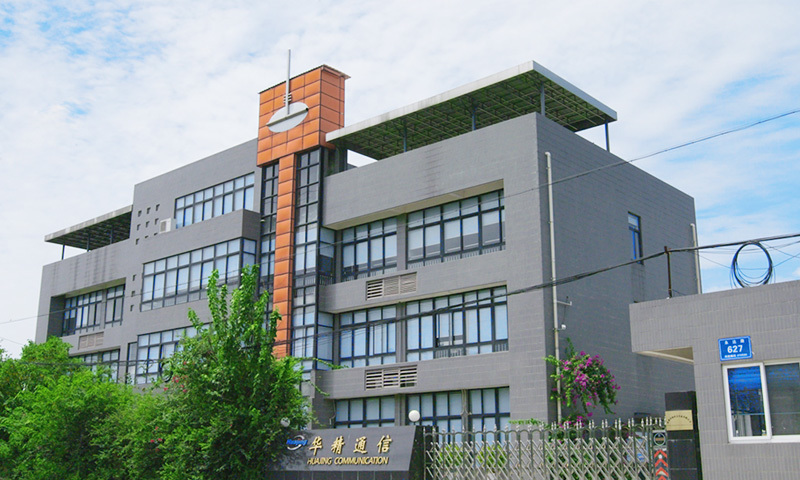
Chengdu Huajing Communication Equipment Co., Ltd.