Home
Product
FTTH Product
Splitter-Distribution Box
Optical Fiber Panel
User Terminal Box
Optic Fiber Connector Box
Dome Closure
In line Closure
Optic Fiber Terminal Box
Pull-Out
Wall-Mounted
Rack Mount
Wiring Series
ODF unit
Distribution Cabinet
Network Cabinets
Transfer-cabinet
Cable Clamp
Accessories Series
Splice tray
Heat shrinkable tube
Cable protective cassette
Others
Blog
Company News
Industry News
About
Profile
Certification
Workshop
Contact
Inquire Now
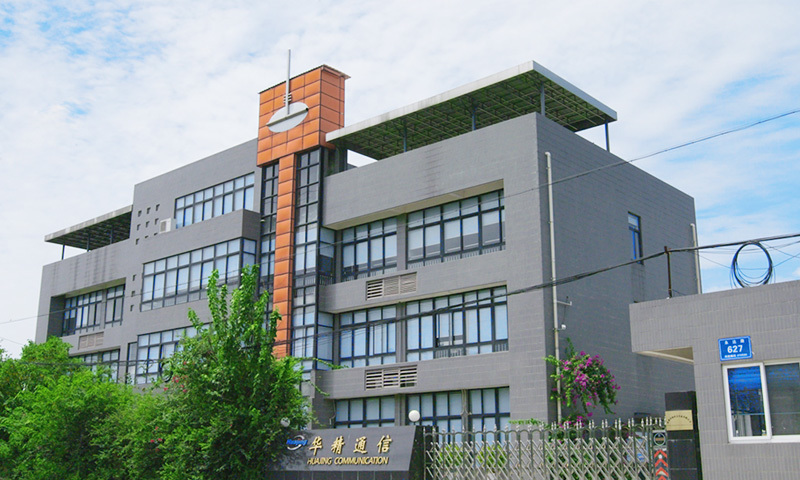
Hua Jing Communication Equipment is a national high-tech enterprise specializing in the manufacturing of optical communication wiring products.
The company leverages its existing technological advantages and adopts modern enterprise management systems to regulate its operations. The company strictly adheres to the requirements of the "ISO9001:2015" and "ISO14001:2015" international standards and has established a rigorous quality, environmental, and safety management system. It has obtained honorary certificates such as "Quality Assurance System," "Environmental Management System," and "Safety Standardization." Our products have undergone third-party testing and obtained corresponding reports, and have also obtained the telecommunications equipment access license from the Ministry of Industry and Information Technology.
China Telecom and China Unicom have opened more than 27,000 shared 5G base stations.
On December 26, 2020, at the "2020 China Academy of Information and Communications Technology ICT Deep Observation Conference," Wang Zhiqin, vice president of the China Academy of Information and Communications Technology, stated that the network co-construction and sharing between China Telecom and China Unicom has received widespread attention from the industry. By December of this year, the number of shared base stations opened by the two parties has exceeded 27,000. On September 9 this year, China Unicom and China Telecom jointly announced that they would cooperate on 5G network co-construction and sharing. According to the cooperation agreement, Unicom will cooperate with China Telecom to jointly build a 5G access network nationwide. Both parties will delineate regions, construct zones, and be responsible for the 5G network construction work in their designated regions. Whoever constructs, invests in, maintains, and bears the cost of network operation will be responsible. In terms of network construction areas, the two parties will undertake the construction of the 5G network in 15 cities. Based on the total scale of the 4G base stations (including indoor distribution) of both parties as the main reference, the construction area ratio of Unicom and China Telecom in the five northern cities of Beijing, Tianjin, Zhengzhou, Qingdao, and Shijiazhuang is 6:4; in the ten southern cities of Shanghai, Chongqing, Guangzhou, Shenzhen, Hangzhou, Nanjing, Suzhou, Changsha, Wuhan, and Chengdu, the construction area ratio of Unicom and China Telecom is 4:6. Unicom will independently construct 9 cities in Guangdong Province, 5 cities in Zhejiang Province, and 8 northern provinces (Hebei, Henan, Heilongjiang, Jilin, Liaoning, Inner Mongolia, Shandong, and Shanxi) outside the aforementioned areas; China Telecom will independently construct 10 cities in Guangdong Province, 5 cities in Zhejiang Province, and 17 southern provinces outside the aforementioned areas. Previously, the two parties stated that the 5G network co-construction and sharing cooperation, especially the continuous sharing of 5G frequencies by both parties, will help reduce the construction and operation and maintenance costs of the 5G network, efficiently achieve 5G network coverage, rapidly form 5G service capabilities, enhance the market competitiveness of 5G networks and services, improve network efficiency and asset operation efficiency, and achieve mutual benefit and win-win results for both parties.
Italian Minister of Industry: Huawei should be allowed to participate in 5G network construction
According to Reuters, Italy's Minister of Industry stated last Sunday that Huawei should be allowed to participate in Italy's future 5G networks. This follows a recommendation from an influential parliamentary committee to block Huawei in Rome. The United States has been lobbying Italy and other European allies to not use Huawei equipment in next-generation networks, and is closely scrutinizing another Chinese telecommunications equipment supplier, ZTE, which the US claims may pose a security risk. Both companies firmly deny any such risks. "We have passed legislation to safeguard national security. As long as the correct countermeasures are taken, there will be no dispute over the possibility of (Huawei's) entry," Italian Industry Minister Stefano Patuanelli told Il Giornale. Last week, Italy's parliamentary security committee Copasir stated that the government should consider preventing Huawei and ZTE from participating in the deployment of 5G networks. Italy's largest telecommunications company, TIM, is selecting suppliers to upgrade its network infrastructure, and Huawei is one of the possible contenders. Italian Deputy Prime Minister Riccardo Fraccaro said last Friday that the government would not be able to ignore Copasir's opinion. However, Stefano Patuanelli stated on Sunday that "Huawei offers the most cost-effective solutions." He added: "You cannot wave the flag of the market with one hand and the flag of protectionism with the other."
What are China's intentions behind acquiring the '192' mobile number segment?
Next step, China Broadcasting Network officially launches mobile communication services? On December 24, the news that China Broadcasting Network received the "192" number segment public mobile communication network number issued by the Ministry of Industry and Information Technology, after being released by DVBCN in a timely manner, has received a lot of attention. The editor sees that friends from both the broadcasting and communication industries are enthusiastically discussing their yearning for the new number segment. Judging from the frequent bursts of news related to Guangdian 5G recently, as the year-end approaches, the shift of the broadcasting system, represented by China Broadcasting Network, to access mobile communication services is truly capturing the attention of many vertical industry players. And at the end of the year, not only the number segment, but also other "unofficial" news hotspots such as 5G co-construction, will serve as a bridge, and China Broadcasting Network will inevitably advance into 2020 under the focus of everyone's attention. For China Broadcasting Network, under unprecedented circumstances, how to directly launch 5G mobile communication services as a broadcaster will inevitably face pressure. After all, under such all-industry and national attention, how to sing a strange play well tests the coordination and strength of the entire system, including the top-level design and the basic execution level. The "19x" number segment is almost fully in place. This time, the Ministry of Industry and Information Technology issued all "19x" number segments to four companies, and clearly stated that it is to provide resource guarantees for 5G commercial use. These new number segments will also become effective means of attracting 5G new network users. According to the information currently known to DVBCN, the number segments that have been allocated are as follows: This "19x" number segment is not the first time issued by the Ministry of Industry and Information Technology. In 2017, the Ministry of Industry and Information Technology issued the 199 and 198 number segments, and then successively released the 191 number segments. Therefore, among the current "19x" number segments, only the 194 number segment has not been issued. What does the broadcasting network use the number segment for? In 2016, China Broadcasting Network actually obtained the "Basic Telecommunications Business Operating License" issued by the Ministry of Industry and Information Technology, but it was only allowed to operate domestic data transmission business and domestic communication facilities service business nationwide. These businesses have also been sought after by various provincial network companies. Under the siege of IPTV, OTT TV, and mobile internet video services provided by operators, the problem of user loss in the national cable television industry represented by China Broadcasting Network has never stopped, especially after the number of wired digital television users fell below 200 million, the situation is even more severe. 5G wireless networks are a "killer" that continues to destroy the survival environment of traditional cable television, but it is also a "top-notch needle" that can be used by the cable television industry to revitalize itself. Under such circumstances, China Broadcasting Network, using new technologies such as 5G as a lever, obtained the 5G commercial license issued by the Ministry of Industry and Information Technology, and provided a feasible channel for broadcasting to provide mobile communication services. According to DVBCN's author, the well-known foreign cable television service provider Comcast once also launched mobile communication business lines in order to open up the situation. Comcast then officially established "XfinityMobile" in 2017 to provide mobile communication services to its users, including XfinityMobile contract phones launched with some manufacturers. However, unlike China Broadcasting Network, Xfinity mainly provides mobile virtual network services. This time, the "192" number segment obtained by China Broadcasting Network is also the first public mobile communication number segment officially obtained by the national broadcasting system. DVBCN editor believes that the significance is reflected as follows: 1. It marks that China Broadcasting Network has basically determined that it will launch mobile communication services. Since the Ministry of Industry and Information Technology agreed to China Broadcasting Network's participation in 5G network construction last year (2018), China Broadcasting Network has also applied for mobile communication qualifications. Previously, many provincial network companies have launched LTE equipment bidding, mainly to conduct tests in multimedia broadcasting, integrated services, smart cities, etc. The formal establishment of this number segment means that China Broadcasting Network has the qualifications to carry out mobile communication services, and it is no longer just speculation. 2. It provides the "number segment" as a basic guarantee for the successful implementation of Guangdian 5G business. This year, the Ministry of Industry and Information Technology revised and added "fifth-generation digital cellular mobile communication services" to the "Telecommunications Business Classification Catalog (2015 Edition)". According to the explanation, the fifth-generation digital cellular mobile communication service refers to the voice, data, and multimedia communication services provided by the fifth-generation digital cellular mobile communication network. As mentioned in the previous article, the Ministry of Industry and Information Technology also stated that the issuance of this new number segment is also to lay the foundation for the promotion of 5G commercial use. China Broadcasting Network will also use this opportunity to take steps to lay out 5G. 3. It marks the formal establishment of the status of the fourth major operator, and China Broadcasting Network has truly become a telecommunications operator with the qualifications for number portability. On November 11 this year (2019), the Ministry of Industry and Information Technology listed China Broadcasting Television Network Co., Ltd. as a notification unit (enterprise) for number portability in the "Number Portability Service Management Regulations". At that time, it was speculated that China Broadcasting Network might also have the qualifications for number portability. Now, the establishment of the new number segment shows that China Broadcasting Network also has the qualifications for number portability. Because China Broadcasting Network itself is extremely weak in terms of communication infrastructure and user groups, under the impetus of the issuance of new number segments and the number portability policy, it can win over some user groups. After all, as a new operator, users are still willing to "try it out". Guangdian 5G still needs "fission" This time, China Broadcasting Network obtained the number segment for the first time, which has changed the long-term situation of the three major operators. Because the broadcasting network still needs to complete the preparation of infrastructure and solve the problems of business and market, it is impossible to predict the future complete appearance and direction for a while, but for users, it has opened up a new situation, added a new choice, and will also promote changes in the quality of communication services. Not long ago, China Broadcasting Network also stated in an industry meeting that it would achieve the goal of "First call" through 700M 5G VoNR by the end of 2019. It is reported that China Broadcasting Network and Huawei are preparing for SA-based 700MHz VoNR First call. This means that China Broadcasting Network will also directly cross the VoLTE stage and take the lead in deploying VoNR services. With the resource advantage of 700MHz, the cost of Guangdian building and opening base stations will be lower than that of the three operators, but the cost will not be very low. Previously, with the support of Huawei and other partners, China Broadcasting Network had a reliable source of small-scale supply of 700MHz 5G base stations. In terms of terminals, some domestic baseband chips already support the 700MHz frequency band, so there is also a guarantee for 5G mobile phones. In terms of the Internet of Things, chips already support the 700MHz frequency band. Various industry terminals can be customized and produced as needed. It is expected to enter a stage of rapid development after 2021. In addition, after China Broadcasting Network obtained the 5G license, the future direction of China Mobile has also been widely discussed. Currently available information shows that the equity structure of China Mobile is still 51% owned by China Broadcasting Network and 49% owned by CITIC Group. If China Broadcasting Network formally launches mobile communication services, what arrangements will be made for China Mobile? It is also worth looking forward to. With the approach of 2020 and the expiration of the "13th Five-Year Plan", whether it is the "national cable television network integration" or the "broadcasting 5G construction", China Broadcasting Network has unexpectedly reached the center of the stage under the "secrecy". Judging from the official announcement during the World 5G Conference, the broadcasting system should have made plans and arrangements, dared to deal with public opinion, and has certain action capabilities as a guarantee, but more substantive content is still being determined.
We will contact you within one business day. Please check your email.